The short answer
Turn off all water, read your meter, wait at least 30 minutes, and read it again. If the numbers moved, you have a leak. Then close the main valve at the house and watch the meter: if it stops, the leak is inside; if it keeps moving, it is on the buried line. Toilets, irrigation and the pool are the usual suspects.
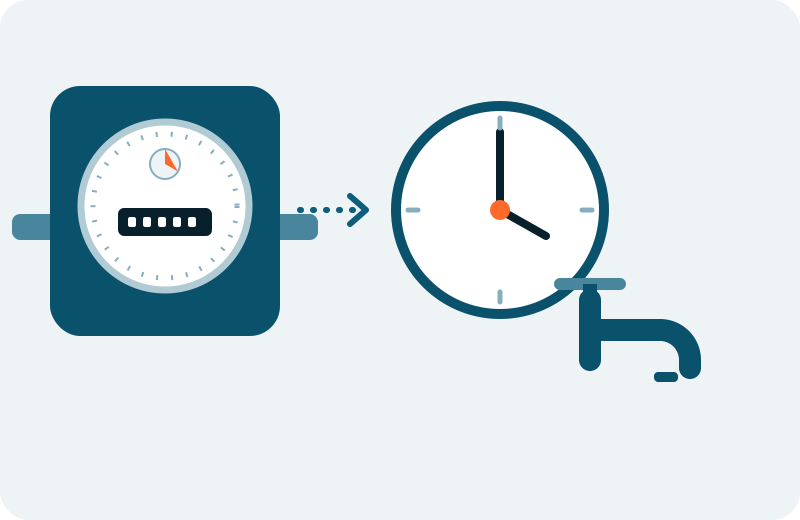
What do you need for a home water leak test?
Almost nothing. The whole test is a few minutes of active work plus a waiting period, and it tells you whether water is escaping and roughly where to look. If you would rather skip ahead, the table near the end shows how to read each result. For the bigger picture, our overview explains how professionals find a hidden leak once a home test has pointed to one.
- A pen and paper, or your phone camera, to record readings and times.
- A flashlight, and a flat-head screwdriver to lift the meter lid.
- Food coloring or a toilet leak-detection tablet.
- A timer, and about an hour when no one needs to use water.
Step 1: Where is your water meter, and how do you read it?
Most homes have the meter in a lidded box set in the ground near the curb or the front edge of the property. Lift the lid carefully with a screwdriver, because spiders and insects like the space, and keep your fingers clear of the edge. Leave any valve at the meter alone: it belongs to the utility.
The face of the meter has odometer-style digits and often a small dial or triangle called the leak indicator, which turns whenever any water flows. Look at the units too. Meters report gallons, cubic feet or CCF, where one CCF is 100 cubic feet and about 748 gallons. Take a photo of the face now so you have a clear starting reading.
Step 2: How do you run the meter test?
The aim is to make sure nothing is using water, then see whether the meter still moves.
- Stop every use of water.Close all taps, and make sure the dishwasher, washing machine, ice maker and any water softener are idle. Switch the irrigation controller off and turn off a pool auto-fill if you have one. Do not flush.
- Look at the leak indicator.Watch it for a couple of minutes. If it is spinning or moving, water is flowing somewhere. Note that, then continue so you can measure how fast.
- Record the starting reading.Write down or photograph the digits and the time.
- Wait.Give it at least 30 minutes, and an hour or longer if you can. Overnight is the most sensitive, as long as no one uses water.
- Read the meter again.Compare the digits with your first reading. Any difference means water passed through the meter while everything was supposedly off.
Pro tip: do it overnight
A reading just before bed and another first thing in the morning catches slow leaks that a short test misses. Keep the irrigation controller and any auto-fill off for the night so they do not confuse the result.
Meter leak calculator
Enter two meter readings taken with all water switched off. The calculator estimates how much water passed through the meter in that time.
Your estimate will appear here.
If the number the calculator gives surprises you, keep in mind that it assumes nothing else was running. A single running toilet or an irrigation valve that opened during the window will make the estimate look larger than the leak you are chasing.
Step 3: How do you tell whether the leak is inside or outside the house?
Find the main shutoff valve at the house. It is usually where the water line enters the building, often near the water heater, in a garage or on an outside wall. A round-wheel gate valve closes clockwise, and a lever-handle ball valve closes with a quarter turn so the handle sits across the pipe. Our guide to the first 30 minutes of a leak shows both types.
Close the valve, then watch the meter. If the leak indicator keeps moving, the leak is on the buried line between the meter and the valve. If the meter stops, the leak is on the house side of the valve, in the plumbing or a fixture. One caution: some irrigation lines, pool fills and outdoor taps connect ahead of the house valve, so close their own shutoffs as well, or you may blame the wrong part of the system.
Step 4: What are the usual suspects to check?
Most leaks that move a meter are not mysterious. Check these before you assume something is hidden.
- Toilets: lift the tank lid, add several drops of food coloring and do not flush. If color shows in the bowl after 10 to 15 minutes, the flapper is leaking. A faint hiss, or a toilet that refills by itself, points the same way.
- Faucets and showerheads: look for drips and for mineral crust around the base.
- Under sinks: check supply lines and shutoff valves for moisture, rust or a swollen cabinet floor.
- Water heater: look at the base, the fittings and the relief valve pipe for drips or corrosion.
- Appliances: inspect washing machine hoses, the dishwasher connection and any refrigerator water line.
- Outdoors: check hose bibs, run each irrigation zone and watch for geysers or soggy spots, and try the bucket test if you have a pool.
How do you read the results?
Match what you saw to the first column. The last column says where to go next.
| What you saw | What it usually means | Next step |
|---|---|---|
| Meter is still with everything off | No continuous leak during the test window. | Repeat overnight. If your bill is still high, see high water bill leaks. |
| Meter moves, and stops when the main valve is closed | The leak is on the house side: a fixture, a pipe in a wall, the water heater or lines in the slab. | Check toilets and fixtures, then read about hidden leaks and slab leaks. |
| Meter keeps moving with the main valve closed | The leak is on the buried line, or on an irrigation or pool line connected ahead of the valve. | Read about water line leaks and irrigation leaks. |
| Meter moves only when the irrigation supply is open | The leak is in the sprinkler or drip system. | Run each zone and watch the heads and valve boxes. |
| Pool drops more than a bucket of water beside it | Loss beyond evaporation: shell, fittings or plumbing. | See pool leak detection. |
What can a home test not tell you?
A meter test proves that water is flowing. It does not say where. It can also miss leaks that only run at certain times, such as a valve that seeps overnight, and a very small leak may not move the digits in a short window. A hot-water line leaking under a slab might show only as a warm patch on the floor and a steady bill.
Warning: do not open walls or floors to hunt for the leak
Cutting into drywall or chipping a slab can hit other pipes or electrical lines and turn a small problem into a large one. Once your test has narrowed things down, let a provider pinpoint the spot with listening, thermal and moisture tools.
When should you stop and call for help?
Call when the meter moves and you cannot find the cause, when a floor feels warm, when you hear hissing with everything off, or when part of the yard stays wet. The right guide depends on the result: a moving meter with the main valve closed points to water line leak detection, a warm floor to slab leak detection, and stains or a musty smell to hidden leak detection. If you are still not sure, a local leak detection provider can talk through what you found and suggest the next step.
Home water leak test FAQs
How long should the meter test last?
Watch the leak indicator for a couple of minutes first, because a spinning indicator already answers the question. For the two-reading test, wait at least 30 minutes, and an hour or more is better. If you can keep all water off overnight, a before-bed and first-thing reading is the most sensitive version.
My meter has no leak indicator. What can I do?
Use the main dial or the odometer-style digits instead. Note the reading and the time, keep all water off, and compare after an hour or longer. Any change in the digits means water went through the meter.
What if the meter moves only a little?
A small, steady movement still means water is escaping, and small leaks add up because they never stop. Run the calculator to turn the movement into gallons per day, then work through the toilets and fixtures before assuming something hidden.
Is the toilet dye test safe for my toilet?
Plain food coloring or a leak-detection tablet made for toilet tanks is generally harmless. Do not flush while the test runs, and flush once afterward so the dye does not sit in the tank.
Should I tell my water utility about a suspected leak?
It can help. Your utility can often confirm meter readings, and some can show usage by day or hour. What they offer varies, so ask. Responsibility for repairs usually depends on where the leak is relative to the meter.
Keep reading
Once your test points to a type of leak, these guides explain the signs, the causes and what a provider does on site.