The short answer
If the source is visible and reachable, such as a dripping fixture or a failed hose, call a plumber. If it is hidden, unknown, buried or keeps coming back, start with leak detection so any repair is aimed at the real problem. Some companies do both, so ask for the finding in writing and compare repair quotes.
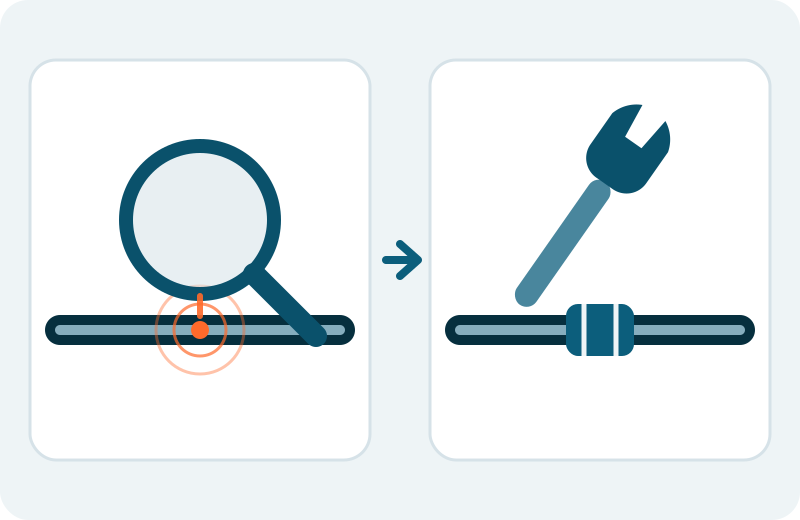
What does each service actually do?
Leak detection answers the question where is the water going. Plumbing repair answers the question how do we stop it. They overlap in the tools they use, but they solve different problems, and mixing them up is how people end up paying for exploratory work they did not need.
| Leak detection | Plumbing repair | |
|---|---|---|
| Main purpose | Find the exact location and likely cause of a leak. | Fix the leak or replace the faulty pipe or fixture. |
| Typical tools | Meters, pressure tests, listening gear, thermal cameras, moisture meters, tracer gas. | Hand tools, pipe and fittings, torches or crimpers, excavation or wall access. |
| What you get | The location, the cause and the repair options, ideally in writing. | A working system and, where relevant, restored access points. |
| Best moment to call | When the source is hidden, unknown or recurring. | When the source is known and reachable. |
Some companies do both, and some do only one. That is not a problem in itself, as long as you can see what was found and decide for yourself what happens next. Our Arcadia leak detection overview explains how detection works from the first call to the findings.
When should you start with leak detection?
- Your meter moves with everything off, but you cannot see where the water is going.
- A floor feels warm, or you hear running water with nothing on. See slab leak detection.
- A stain keeps coming back after it was patched, or you suspect water inside walls or ceilings.
- The leak may be buried, under a slab, in a pool or in the irrigation system.
- You need documentation of where the leak was for an insurer or a contractor.
In each case the aim is the same: avoid opening floors, walls or yards until you know exactly where to open, and keep the opening as small as possible.
When can you go straight to a plumber?
- A faucet, toilet or showerhead is visibly dripping and you can see the problem.
- A supply hose under a sink or behind a washing machine has failed.
- A drain is blocked or a trap is leaking in plain view.
- A water heater is leaking at a fitting you can see and reach.
When the source is obvious, detection tools add little. The plumber is already looking at the answer.
What if the same company does both?
It can be convenient and it is common. The thing to protect is the independence of the finding. Ask for the location and cause in writing, with a short description of how it was confirmed, before you approve the repair. That way you can compare repair quotes if you want to, and the finding stands on its own whichever company does the work.
What should you ask before you agree to anything?
- What will you test, and in what order?
- How will you show me what you found, and will it be in writing?
- If you find no leak, what do I owe, and what do you suggest next?
- Does the price include access, patching and cleanup, or only the finding?
- Which licenses or registrations apply, and can I check them with the relevant state board?
- Do you carry insurance, and what does it cover?
A good provider answers these plainly. If you are comparing options, the page on high water bill leaks shows what a structured investigation looks like.
What are the red flags?
- Pressure to sign the same day, or a price that changes once someone is on site.
- No explanation of the method, or a refusal to share what was found.
- A recommendation to replace all the plumbing, without test results that justify it.
- Vague answers about licensing or insurance when you ask directly.
- A very low headline price followed by long lists of add-ons.
Pro tip: ask to see the evidence
Whatever the method, a professional should be able to show you what led to the conclusion: a pressure reading, a moisture map, a thermal image, a sound trace. If you cannot see the evidence, ask for it before you pay for the repair.
How do you think about cost without a price list?
Prices vary by provider, property and job, so we do not quote them. What does help is comparing like with like. Ask what each quote includes, and weigh the cost of finding the leak against the cost of opening up the wrong place. Detection is a diagnostic cost. Done early, it often prevents repeated, exploratory repairs, and when talking with a local provider you can ask what is included before you commit.
Detection versus repair FAQs
Can a plumber find leaks too?
Many can, and some plumbers carry listening and thermal equipment. What matters is the method and the evidence. Ask what the provider will test, how they will show you the result, and whether the finding comes in writing.
Is leak detection worth it for a small leak?
A small leak runs around the clock, so it can still waste a great deal of water and damage materials quietly. If the source is obvious and easy to fix, you may not need detection. If it is hidden or you are not sure, detection avoids guessing.
Do I need a detection report for insurance?
Not always, but written findings can support a claim by documenting where the leak was and what caused it. Ask your insurer what documentation they need before work begins, since requirements differ.
Will detection tell me how to fix the leak?
It tells you where the leak is, what is likely causing it and what repair routes are possible. The repair itself is a separate step, and you are free to get quotes from more than one contractor.
Keep reading
Whichever way you decide, it helps to know the type of leak you are dealing with. Each guide below covers one.