The short answer
Switch off the appliance, close its supply valve and dry the area. Then find the wet spot's highest point: washer hoses and door seals, water heater fittings and relief valve, or the disposal's flange, dishwasher hose and drain pipe are the usual culprits. If the area stays wet with the appliance off and its supply closed, the water is coming from a pipe, and that is a job for leak detection, not an appliance repair.
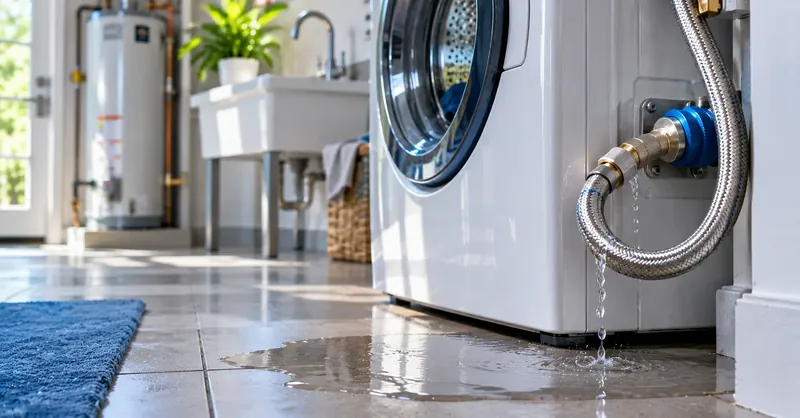
What do you do first when an appliance is leaking?
Stop the water, make it safe, then find the source. A leak from an appliance looks simple, but the spot where water appears is often not where it starts, and a lot of damage happens in the minutes before anyone notices.
- Unplug the washing machine or switch off the disposal at the wall switch or breaker before you reach near it.
- Close the supply valves: the two small valves behind a washer, the cold-water inlet on a water heater, or the valve under the sink for a dishwasher or disposal line.
- For a water heater, switch off its power at the breaker, or set a gas unit's control to off or pilot following the label.
- Soak up the water, move belongings away and photograph the area before cleaning up.
Our guide to the first 30 minutes of a leak covers the shutoff, safety and documentation steps in more detail.
Why is your washing machine leaking water?
Leaking water from a washing machine can come from the hoses, the door seal, the drain or the pump. When a washing machine is leaking water, where the puddle appears is the best clue. Pull the machine out if you can do so safely, dry the floor and run a short cycle while you watch.
| Where the water shows up | Likely cause | What to check |
|---|---|---|
| At the back, near the hoses | A loose or worn supply hose connection, or a failed hose | Look for drips at the connections and for bulges, cracks or rust. Replace worn hoses. |
| Under the front door (front-loaders) | A damaged or dirty door gasket | Wipe the rubber seal, look for tears and check for items caught in it. |
| Under the middle of the machine | A drain hose, drain pump or tub seal | Run a cycle with a dry towel underneath and see where it gets wet. |
| Overflowing from the drain pipe | A partial clog, or a standpipe that is too small | Check that the drain hose is seated correctly and the standpipe drains freely. |
| Foam or suds on the floor | Too much detergent | Use the amount on the label, and use the right type for your machine. |
If you replace the hoses, many people choose braided hoses, but any hose can fail, so inspect them periodically. Hand-tighten the connections and then follow the manufacturer's guidance, since overtightening can crack the fittings. If the water seems to keep coming even with the washer off and the valves closed, the source is a pipe, not the machine.
How do you check for water heater leaks?
Water heater leak detection starts by finding which part of the heater is wet. Dry the tank and the fittings, then put a dry paper towel or a piece of cardboard under each area and check it after a while.
- Connections at the top: the hot and cold pipes and their fittings are the most common place for a slow drip.
- The temperature and pressure relief valve and its discharge pipe: a drip here can mean pressure or temperature is too high, or that the valve is worn. Never cap or plug the discharge pipe.
- The drain valve at the bottom: these often seep from the valve or its cap.
- The tank body or base: water coming from the tank itself, or pooling from the base, usually means the tank has failed and the heater needs replacing.
Condensation on a cool tank or a gas unit's flue can look like a leak, so dry the surface and watch whether it returns. Remember that a heater in a closet or garage can leak into a wall or floor you cannot see. If the surroundings are damp but the heater is dry, read about hidden leak detection, and if the heater's relief valve drips and your meter moves, our guide to a meter that moves with no leak found explains why.
Where does a garbage disposal leak come from?
A garbage disposal leak usually comes from one of three places, and a dry paper towel under each one will show you which.
- The sink flange at the top. Water leaks around the ring where the sink meets the disposal, and it shows when you run the tap. This is a seal or mounting problem.
- The dishwasher hose connection on the side. A loose clamp or a cracked hose drips when the dishwasher drains.
- The drain pipe and the body. A loose pipe connection can often be tightened, but a leak from the body or bottom seam of the unit generally means it needs replacing.
Switch the disposal off at the wall switch or breaker before looking, and never put a hand into the unit. Dry everything, run the tap, then run the dishwasher, and watch each connection with a flashlight. A cabinet floor that is soft or stained points to a leak that has been running for a while.
When is it not the appliance at all?
If the area stays wet after the appliance is off and its supply is closed, the water is coming from a pipe. Other clues include a meter that keeps moving, a stain on the ceiling below, a warm patch on the floor near the water heater, or a musty smell in a cabinet that is otherwise dry. A hidden plumbing pipe leak behind the appliance can look exactly like an appliance leak at first.
Start with the home water leak test. If the meter test points to a leak and the appliance checks are clean, the next step is detection, and our overview of how to find the source of a leak explains how a provider narrows it down. If the appliance itself is clearly at fault, a plumber or appliance technician can repair it, and our comparison of leak detection and plumbing repair helps you decide who to call.
Appliance leak FAQs
Can a washing machine hose burst?
Yes. Rubber supply hoses can bulge, crack or fail at the connection, and a failed hose can release a large amount of water quickly. Look at the hoses for bulges, cracks or rust at the fittings, and turn the supply valves off when the machine will be unattended for a long time.
Is a leaking water heater dangerous?
It can be. There is a risk of scalding, and water near the electrical connections or a gas control is a hazard. Switch off the power or gas, close the cold supply valve, keep clear of wet wiring and call a plumber. A leak from the tank itself usually means the heater needs replacing.
Does homeowners insurance cover a leaking appliance?
It depends on the policy and the cause. Many policies treat sudden appliance failures differently from slow leaks or wear. Read the policy or call your insurer early, and keep photos and receipts.
Can I keep using a washing machine that leaks a little?
It is better not to. A small leak can soak flooring and the subfloor unnoticed, and a hose that is leaking slightly can fail completely. Switch it off, close the supply valves and find the source first.
How do I know if my garbage disposal needs replacing?
If water is leaking from the body of the unit or from its bottom seam, repair is usually not practical and replacement is typical. Leaks at the sink flange, the dishwasher connection or the drain pipe can often be fixed without replacing the whole unit.
Keep reading
If your checks point away from the appliance, these guides cover where the water may be coming from.