The short answer
Professional leak detection equipment falls into four groups: listening tools (acoustic leak detection), thermal and moisture tools, pressure and gas tests, and locators. Each finds a different kind of leak, so providers combine them. Home water leak detection systems, such as sensors and smart shutoff valves, warn you that water is present or flowing, but they cannot pinpoint a hidden pipe leak.
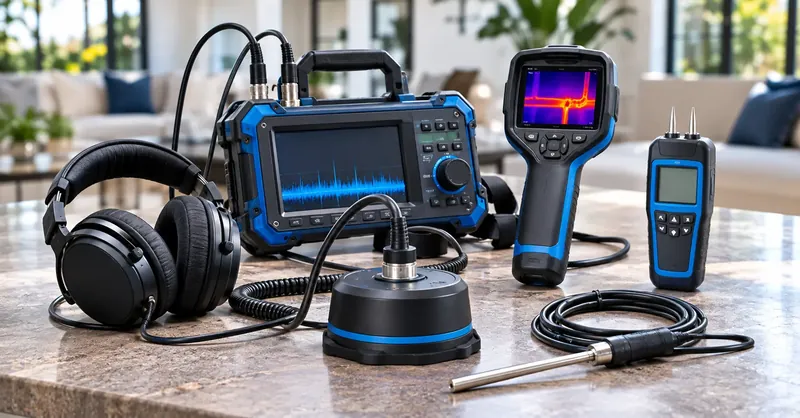
What equipment do professionals use for leak detection?
Leak detection equipment falls into a handful of groups: tools that listen for escaping water, tools that read heat and moisture, tests that use pressure or gas, and locators that trace pipes. No single tool finds every leak, so providers choose a combination to suit the pipe, the building and the symptoms. For the bigger picture of how a visit unfolds, see our overview of leak detection specialists and how they work.
Plumbing leak detection usually starts with a meter test or a pressure test to confirm that a leak exists and which line it is on, and only then moves to the tools below to find the exact spot.
| Tool | What it detects | Works best for | Main limit |
|---|---|---|---|
| Acoustic listening | The sound of pressurized water escaping | Metal pipe under slabs, walls and the ground | Plastic and large pipes carry sound poorly; background noise interferes |
| Thermal imaging camera | Surface temperature differences | Hot-water leaks, damp materials, floors and ceilings | Needs a temperature difference; sees surfaces, not inside walls |
| Moisture meter | Moisture content in drywall, wood and tile backing | Mapping how far dampness has spread | Readings need a dry reference and some interpretation |
| Pressure test | Whether an isolated line holds pressure | Confirming which line is leaking | Says which line, not where |
| Tracer gas | A harmless gas escaping from an emptied line | Quiet leaks and plastic pipe | Needs the line to be emptied and tested in sections |
| Line locator | The route and depth of a buried pipe | Knowing where to listen and where to repair | Does not find the leak itself |
| Inspection camera | The inside of a cavity or pipe | Confirming a source through a small opening | Needs access, even if small |
How does acoustic leak detection work?
Water escaping from a pressurized pipe makes a sound, a hiss or a vibration, and that sound travels through the pipe, the soil or the concrete around it. Acoustic leak detection uses sensitive microphones or sensors to pick it up. The sound is loudest right over the leak, so a technician can move a sensor along a floor or the ground until the signal peaks.
For longer pipe runs, a correlator uses two sensors placed on accessible points, such as valves or fittings, on either side of the suspected leak. Each sensor records the same sound. Because the sound reaches one before the other, the software can calculate how far along the pipe the leak sits, using the pipe's length and material.
Several things limit it. Plastic and large-diameter pipe damp the sound, traffic and appliances add noise, and a leak that is only a slow seep may be quiet. That is why acoustic leak detection is normally paired with a pressure test or thermal imaging, and why it is done at quiet times when possible. If you suspect a leak under concrete, the guide to slab leak detection shows how listening and thermal tools work together on a floor.
What do thermal cameras and moisture meters add?
A thermal camera turns temperature differences into an image. A leaking hot-water line can warm the concrete above it, and wet materials often look cooler than dry ones as water evaporates from them. It cannot see through walls, but a patch that differs from its surroundings tells the technician where to look more closely.
Moisture meters measure how much water is in a material. Pin-style meters push two small probes into drywall or wood, while pinless meters scan the surface. The readings are most useful as a map: taking them in a grid shows the shape of the damp area and its wettest point, which is often closer to the source. This is the core of residential water leak detection inside walls and ceilings, covered in our page on hidden leak detection.
How does underground water leak detection work?
Underground water leak detection starts with isolation. Closing the main valve at the house and watching the meter shows whether the leak is on the buried line. The line can then be tested in sections with pressure, listened to along its route with ground microphones, and traced with a locator so that the leak is pinpointed in the right place. Tracer gas can help when sound is unclear, especially in plastic pipe.
The aim of underground leak detection is to find the exact point of failure before anything is dug, so a repair opens a short stretch and not the whole yard. The page on water line leak detection explains the shutoff test you can do yourself first, and the guide to irrigation leak detection covers buried sprinkler lines.
What is a water leak detection system for the home?
A water leak detection system is something you install in the home to warn you about water, as opposed to equipment a technician uses to locate a leak. They come in a few types, and they do different jobs.
| System | What it tells you | What it cannot tell you |
|---|---|---|
| Point leak sensors | Water is present at the spot where the sensor sits, such as under a sink, behind a washing machine or beside a water heater | Anything about pipes in walls, slabs or the ground; they alert only after water has escaped to that spot |
| Flow monitors on the main line | Water is flowing continuously or in an unusual pattern | Where the water is going; they flag a problem but do not locate it |
| Smart shutoff valves | Nothing by themselves; they close the main when a sensor or flow pattern signals trouble | Whether a slow leak exists; they are meant to limit damage from bursts and failures |
| Utility usage alerts | Usage that looks unusual, where your utility offers it | The cause or the location, and availability varies by utility |
A system tells you that something is wrong. Equipment in a professional's hands tells you where. They are complementary, and having a system installed does not replace testing when your meter, your bill or your floors suggest a hidden leak.
How do you decide what you need?
- If you want early warning about appliance failures, a few point sensors near the water heater, washing machine and under sinks are a simple start.
- If you want to limit damage from a burst pipe while you are away, ask a plumber about a flow monitor with an automatic shutoff.
- If your meter moves with everything off, a floor is warm, a stain keeps returning or your bill has risen, you need locating, not warning. Start with our home water leak test and then call for water leak detection in Arcadia.
What should you ask a provider about their equipment?
- Which tools will you use for my situation, and why those?
- If sound or thermal readings are unclear, what is your second method?
- How will you show me the evidence for the location you mark?
- Do you need access to valves, cleanouts or the roof, and who arranges it?
- What happens if you cannot locate the leak, and what do I pay in that case?
Leak detection equipment FAQs
Is acoustic leak detection accurate?
It can be very accurate on pressurized metal pipe in quiet conditions, and less so on plastic or large-diameter pipe, where sound carries poorly. Good providers confirm a suspected spot with a second method, such as a pressure test, thermal imaging or tracer gas, before anything is opened.
Can a thermal camera find a leak inside a wall?
Not literally. It shows temperature differences on the surface. A wet area or a hot-water line behind drywall can look different from its surroundings, which is a clue. A moisture meter and a pressure test then help confirm it.
Will a water leak sensor find a slab leak?
Usually not. A point sensor detects water at the place where it sits, so it will not warn you about a pipe leaking beneath a slab. A flow monitor may flag unusual continuous flow, but locating the leak still needs listening, thermal or pressure testing.
Is a smart water shutoff valve worth installing?
It can limit the damage from a burst pipe or a failed appliance connection by closing the main when it detects abnormal flow or a wet sensor. It does not find slow hidden leaks, and installation normally involves a plumber. Whether it suits your home is a question for them.
Does a provider need special equipment to find a leak?
Often, yes. Hidden and buried leaks are hard to locate by eye, which is why providers use listening, thermal, moisture, pressure and gas methods. The right mix depends on where the leak is and what the pipe is made of.
Keep reading
Each guide below shows how the tools in this article are applied to a particular kind of leak.